Monday, June 25, 2012

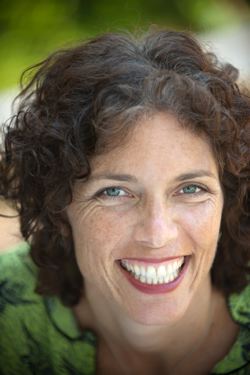
Dennis Kreiss


Pastor Dennis Kreiss became the most recent pastor of Pine Grove Community Church  in Roseburg, Oregon, the first of January 1992. Pine Grove has a combined background of the circuit riding reformed tradition of the Brethren Church and the Sunday School revival movement of the Baptist tradition.  


Pastor Kreiss was raised in the reformed tradition. His favorite part of growing up in a large family of six boys and two girls were the yearly summer month-long camping trips in the Redwood forests. There he learned to love the Creator and his Creation. During his most mischievous years, Dennis began to wonder if he was going to heaven or hell and when he asked his mother, she had the pleasure of leading him to Christ.He says, “I am amazed that I grew up stone-bored in church and came away believing in God.” 

This God-consciousness was nurtured between his junior and senior years in high school when a young man  from the  Moody Bible Institute interned with his church and befriended him. During their many walks and conversations, Dennis was “immersed  in the need to serve this God he barely knew."

Pastor Kreiss went to Western Bible College in Salem, Oregon (now Corban College). While there, he heard Warren Wiersbe talk. From that experience he carried away what became his true faith in Wiersbe's words: "You can have as much of God as you really want, and as little of God with which you are satisfied. Pastor Kreiss went on to finished his education at Cascade Bible College in Bellvue, Washington.


"The real work of discipleship is in the teaching," says Pastor Kreiss. "If you are going to impact the world, you have to teach. One important way to measure your maturity is whether or not you have graduated from learner to teacher, from apprentice to disciple-maker.” In addition to being an intentional disciple, Dennis is pastor to a vital and lively congregation of disciple-makers. He is also a husband, a father, a grandfather, and a self-published writer.
        
All of his books have come out of his role as disciple-maker. The Evidence Locker, his most recent title, is in many ways his research for The Resurrection Files. In both books he mixes his understanding of the chronology and study of the disciples and their natures to create books that are part fictionalized accounts and part teaching.  They back-fill the stories of the appearances of Jesus to the disciples over the forty days following the Resurrection. Each story brings the emotions that must have rolled over the disciples like a shock wave. Pastor Kreiss sees these forty days as the hinge of history.

"If people could just grab hold of the Resurrection it would revitalize the church in America. It was the rocket fuel that impelled the first century believers to spread the gospel, and could do the same today.” Pastor Kreiss says the disciples with greatest impact on his faith surprisingly are the women. "They had to deal with incredible disbelief from the apostles. What a diverse group they were – women who had lived in deep poverty and rejection and women of wealth and position. Nowhere else but in Jesus could they be bound together.” 


He hopes to have found a publisher interested in perusing these books in a combined form by the end of the year. Just writing these books and sharing these stories has revitalized his life and faith. “Faith is an incredible battle full of personal and emotional distraction. I hope someday someone will be able to say, ‘He finished well.’”


Article based on telephone interview conducted 6/20/12

Monday, June 18, 2012

The Discovery by Dan Walsh. Revell, 2012


At the reading of his grandfather’s will, Michael Warner receives not only a very healthy checking account, and a continuing portion of Gerard’s royalties on his many best-selling suspense thrillers that have sold in the millions, but also his grandparent’s home in Charleston.

Michael begins to settle in to make his grandfather’s study his own, and takes down the wooden box to store his grandfather’s typewriter.Inside the richly carved box, Michael discovers a yellowed unpublished manuscript obviously meant for him to find.

It is a story of Nazi spies who come onto the Florida coast on U-boats trained by the Abwehr to sabotage the American war effort. But, this story is different from Gerard’s other books; it is also a story of a tender, forever kind of love that cannot be.

“As Michael delves deeper into the story he discovers something that has the power to change not only his future but his past as well.” It is a story “that explores the incredible sacrifices that must be made to forge the love of a lifetime.”

Dan Walsh has taken a side-bar of World War II history and created a novel within a novel will make you want to stay up late, and when you have reached its final pages, you will want to read it all over again. It has it all, mystery, intrigue, history, romance, characters whose names and lifetimes will stay with you long after you have passed the novel on to another male or female reader you know will love the book as much as you do.

A member of American Christian Fiction Writers, Dan served as a pastor for 25 years. He is the bestselling and award-winning author of The Unfinished Gift, The Homecoming, The Deepest Waters, and Remembering Christmas. Dan and his wife Cindi have two grown children and live in the Daytona Beach area.

Revell Books, a division of Baker Publishing Group, known for their Christian fiction and books on Christian living, self-help, marriage, and family has signed Dan “to write 2 books a year for them through 2014.” The first of three stand-alone novels, The Reunion, will be released in September 2012. Dan Walsh and Gary Smalley, a family counselor and award-winning author of books about family relationships from a Christian perspective, have completed the first of a four-book fiction series. The Dance will be eleased in April 2013.

Tuesday, June 12, 2012

The John Newbery Medal


In 1921 Frederic G.Melcher had the Newbery Medal designed by René Paul Chambellan. The bronze medal has the winner's name and the date engraved on the back. The American Library Association Executive Board in 1922 delegated to the Children's Librarians' Section the responsibility for selecting the book to receive the Newbery Medal.

The inscription on the Newbery Medal still reads "Children's Librarians' Section," although the section has changed its name four times and its membership now includes both school and public library children's librarians in contrast to the years 1922-58, when the section, under three different names, included only public library children's librarians. Today the Medal is administered by the Association for Library Service to Children, a division of ALA.

How the Newbery Medal Came to Be

The Newbery Medal is awarded annually by the American Library Association for the most distinguished American children's book published the previous year. On June 22, 1921, Frederic G. Melcher proposed the award to the American Library Association meeting of the Children's Librarians' Section and suggested that it be named for the eighteenth-century English bookseller John Newbery. The idea was enthusiastically accepted by the children's librarians, and Melcher's official proposal was approved by the ALA Executive Board in 1922. In Melcher's formal agreement with the board, the purpose of the Newbery Medal was stated as follows: "To encourage original creative work in the field of books for children. To emphasize to the public that contributions to the literature for children deserve similar recognition to poetry, plays, or novels. To give those librarians, who make it their life work to serve children's reading interests, an opportunity to encourage good writing in this field."

The Newbery Award thus became the first children's book award in the world. Its terms, as well as its long history, continue to make it the best known and most discussed children's book award in this country.

From the beginning of the awarding of the Newbery and Caldecott Medals, committees could, and usually did, cite other books as worthy of attention. Such books were referred to as Newbery or Caldecott "runners-up." In 1971 the term "runners-up" was changed to "honor books." The new terminology was made retroactive so that all former runners-up are now referred to as Newbery or Caldecott Honor Books.


www.ala.org/alsc/awardsgrants/bookmedia/newberymedal/newberyhonors/newberymedal


Monday, June 4, 2012

The Randolph Caldecott Medal


The Randolph Caldecott Medal

image
In 1937 RenĂ© Paul Chambellan designed the Caldecott Medal. The bronze medal has the winner's name and the date engraved on the back. When the Caldecott Medal was accepted in 1937, the Section for Library Work with Children invited the School Libraries Section to name five of its members to the awards committee each year. For this reason the Caldecott Medal inscription reads, "Awarded annually by the Children's and School Librarians Sections of the American Library Association." This is a combination and simplification of the actual names of the sections. The wording continues even though several ALA reorganizations resulted in 1958 in the present divisions, including the Children's Services Division, now the Association for Library Service to Children, which now has sole responsibility for administering the award.

How the Caldecott Medal Came to Be

Each year the Newbery Medal is awarded by the American Library Association for the most distinguished American children's books published the previous year. However, as many persons became concerned that the artists creating picture books for children were as deserving of honor and encouragement as were the authors of children's books, Frederic G. Melcher suggested in 1937 the establishment of a second annual medal. This medal is to be given to the artist who had created the most distinguished picture book of the year and named in honor of the nineteenth-century English illustrator Randolph J. Caldecott. The idea for this medal was also accepted enthusiastically by the Section for Library Work with Children of ALA and was approved by the ALA Executive Board.
The Caldecott Medal "shall be awarded to the artist of the most distinguished American Picture Book for Children published in the United States during the preceding year. The award shall go to the artist, who must be a citizen or resident of the United States, whether or not he be the author of the text. Members of the Newbery Medal Committee will serve as judges. If a book of the year is nominated for both the Newbery and Caldecott Awards the committee shall decide under which heading it shall be voted upon, so that the same title shall not be considered on both ballots." In 1977 the Board of Directors of the Association for Library Service to Children rescinded the final part of the 1937 action and approved that "any book published in the preceding year shall be eligible to be considered for either award or both awards." Separate committees to choose the Newbery and Caldecott Awards were established in 1978 and began with the 1980 selection committees.
From the beginning of the awarding of the Newbery and Caldecott Medals, committees could, and usually did, cite other books as worthy of attention. Such books were referred to as Newbery or Caldecott "runners-up." In 1971 the term "runners-up" was changed to "honor books." The new terminology was made retroactive so that all former runners-up are now referred to as Newbery or Caldecott Honor Books.

A few words about Randolph Caldecott and his illustrations...

Randolph Caldecott was one of a group of three influential children's illustrators working in England in the 19th century. The other two illustrators were Kate Greenaway and Walter Crane. His illustrations for children were unique to their time in both their humor, and their ability to create a sense of movement, vitality, and action that complemented the stories they accompanied.
The illustration on the Caldecott Medal, which is taken from Caldecott's illustrations for "The Diverting Story of John Gilpin," is a perfect example of the humor, vitality, and sense of movement found in Caldecott's work. The illustration shows John Gilpin astride a runaway horse, accompanied by squawking geese, braying dogs, and startled onlookers.

Resources on Randolph Caldecott

caldecott honor seal


Caldecott Honor Seal 


Monday, May 28, 2012

All The World

 Published by Beach Lane, An Imprint of Simon & Schuster
Liz Garton Scanlon
Marla Frazee


Awards
ALA Notable Children's Books
School Library Journal Best Books of the Year
Horn Book Fanfare
Bulletin Blue Ribbon
IRA Children's Book Award
Capitol Choices List (DC)
CCBC Choices (Cooperative Children's Book Council)
NYPL 100 Titles for Reading and Sharing
Texas 2x2 Reading List
Washington Children's Choice Picture Book Award
Publishers Weekly Best Books
South Carolina Book Award Nominee
Georgia Children's Book Award Nominee
California Collections
New York Times Best Illustrated Books
Parents' Choice Gold Award Winner
PEN USA Literary Award Finalist
CBC/NCSS Notable Social Studies Trade Book
Kirkus Best Children's Book
ALA Caldecott Honor
Bank Street Best Books of the Year - with Outstanding Merit

It is always amazing to me, although why I don't know, that my granddaughter Meredith and I love the same books, and we always seem to pick winners!


All the World, according to the publisher:


"Following a circle of family and friends through the course of a day from morning till night, this book affirms the importance of all things great and small in our world, from the tiniest shell on the beach, to warm family connections, to the widest sunset sky"


All the World, according to me: Oh, boy, here is a good beach book to take with us and it has "Nana" and "Papa" in it, and oh, the poetry:


Rock, stone, pebble, sand
Body, shoulder, arm, hand
A moat to dig, a shell to keep
All the world is wide and deep


All the World, according to Meredith: Don't turn the page yet, look, Nana!


Monday, May 21, 2012

The Breakthrough: A Precinct 11 Novel


Jenkins, Jerry B. The Breakthrough: A Precinct 11 Novel. Carol Stream, Illinois: Tyndale House Publishers, Inc. September 2012.

Dr. Jerry Jenkins is the author of more than 175 books. He has been a journalist, a writer, and an editor. Jenkins is currently encouraging and training new writers through his Christian Writer’s Guild. His books can be found regularly on the New York Times Best Sellers List.

The Breakthrough is the third Precinct 11 Novel, preceded by The Brotherhood and The Betrayal. Although promoted as the third in a trilogy, Jenkins leaves the police procedural open to follow on novels.

Boone Drake is the youngest bureau chief in the history of the Chicago Police Department. Jack Keller, Boone’s first partner, then his mentor and his boss, sponsors Drakes promotion to the head of the newly formed Major Case Squad. Following the first two novels in which like the Old Testament Job, Boone has lost everything: his wife, his son, his home, and his faith.

Now he has a new wife, Haeley, a new son, a new home, a renewed faith, and an increased passion to get gangs off the streets. Haeley won a seven figure settlement from the City of Chicago for false arrest late in their courtship and paid early in their marriage. The money was used to buy a comfortable house in a nice neighborhood, to ensure college educations for Max, who has been officially adopted by Boone, and any future siblings, and to gift Boone with the car of his dreams, with the balance given to the two churches that are important in their lives. Yet Boone is somehow waiting for the other shoe to drop.

When disaster strikes, it seems that Boone is destined to lose everything again, as tragedy threatens those closest to him. Haeley needs him desperately. Max is kidnapped, and all clues lead to a human trafficking ring from the dark and infamous Hutong district in Beijing. The plot is predictable but deftly written, keeping the pages turning. The suspense is created, not by twists and turns of plot, but by the complexity of character development.

Jenkins’s father is a police chief, and he has two brothers who are police officers. Cooperation among police departments and forces from the other squads housed at the 11th Precinct and across state and national jurisdictions is emphasized throughout the novel. Equally emphasized is the true-to-life crises of faith shaped by circumstance and cultivated through the relationships of characters that are believably flawed but redeemable.

Disclosure of Material Connection: I received this book free from Tyndale Publishers as part of their Blogger Review Program. I was not required to write a positive review. The opinions I have expressed are my own. I am disclosing this in accordance with the Federal Trade Commission's 16 CFR, Part 255: "Guides Concerning the Use of Endorsements and Testimonials in Advertising."